
A Century of Wilderness Trips
If you ask former Kabeyun trips counselors about their experiences leading wilderness trips, you’ll get an earful, in all the best ways. That’s what I found when I began researching the evolution of Kabeyun’s trips program for an article in camp’s Annual Report and Newsletter titled “Thoughtfully Embracing Risk In The Wild.”
In Zoom meetings, phone calls, emails, and text messages, 26 former trips leaders and alumni shared their memories about trips dating back to the 1950s with humor, delight, vivid details, and the wise insights that develop over time. Their stories help trace a century of concrete innovations in Kabeyun’s trips – such as new programs, facilities, and gear – as well as less tangible but important changes in priorities and philosophy over the past few decades.
Some of the folks I interviewed left camp long ago, but many more are still involved. Some, like Terry Dash, continue to lead Kabeyun trips, while others now play different roles in camp’s leadership, including director Ken Robbins, chef Mark Robbins, nurse Kevin Wilcox, and seven current members of the Porter Foundation Board of Trustees. Their collective experience and wisdom support today’s trips program, led by Sam Dyer, which sends about 25 groups into the wilderness each week of the summer.
Thanks to the generosity of each interviewee, plus accounts published in Kabeyun’s two history books, I gathered much more material than could fit in one printed newsletter! We’ve curated and condensed much of it here, organized by decade, with gratitude for everyone who took the time to share a story, send a photo, or check a fact.
As with any historical account, this one is imperfect and incomplete, but it captures something essential: Kabeyun’s long-standing commitment to helping boys find adventure and personal growth in the wilderness.
1920s and 1930s
Bringing small groups of boys into the wilderness has been part of Kabeyun since John Porter founded camp in 1924. Inspired by his own outdoor experiences as a young adult, Porter had “an abiding appreciation for the freedom that comes with exploring in the woods under conditions of one’s own choosing,” Dan Schlozman writes in “Kabeyun at 100: An Interpretive Essay.” Before starting his own camp, Porter taught school and spent summers working at camps around northern New England; a six-week canoe trip down the Allagash River was a formative experience.
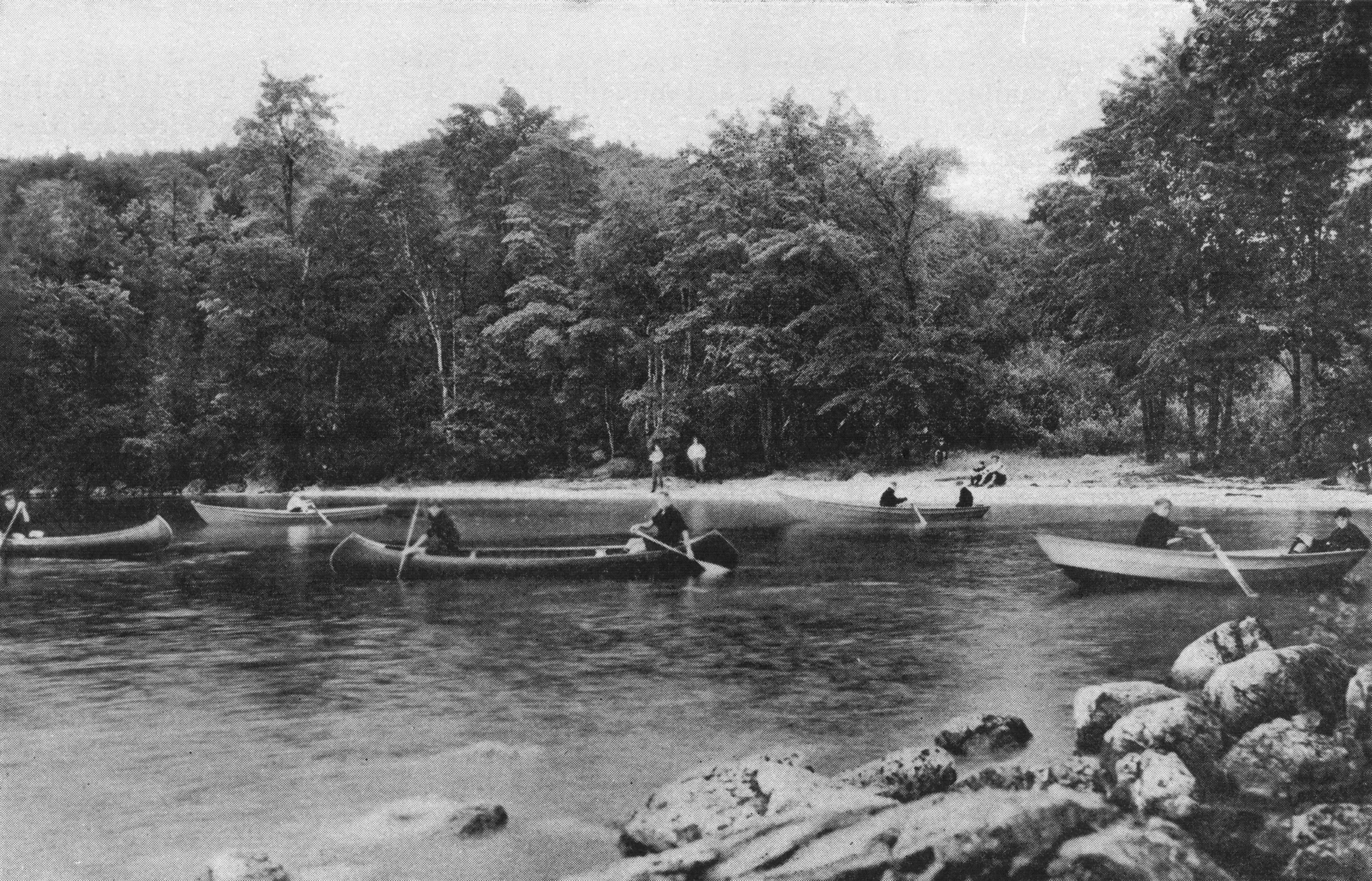
Canoeing and hiking made up nearly all of Kabeyun’s wilderness trips for the first half-century. Camp had two secondhand canvas canoes on the waterfront its very first year. Venturing beyond Lake Winnipesaukee, Kabeyun gradually introduced river trips, and by the mid-1940s, Porter regularly led canoe trips on the Ossipee and Saco Rivers.
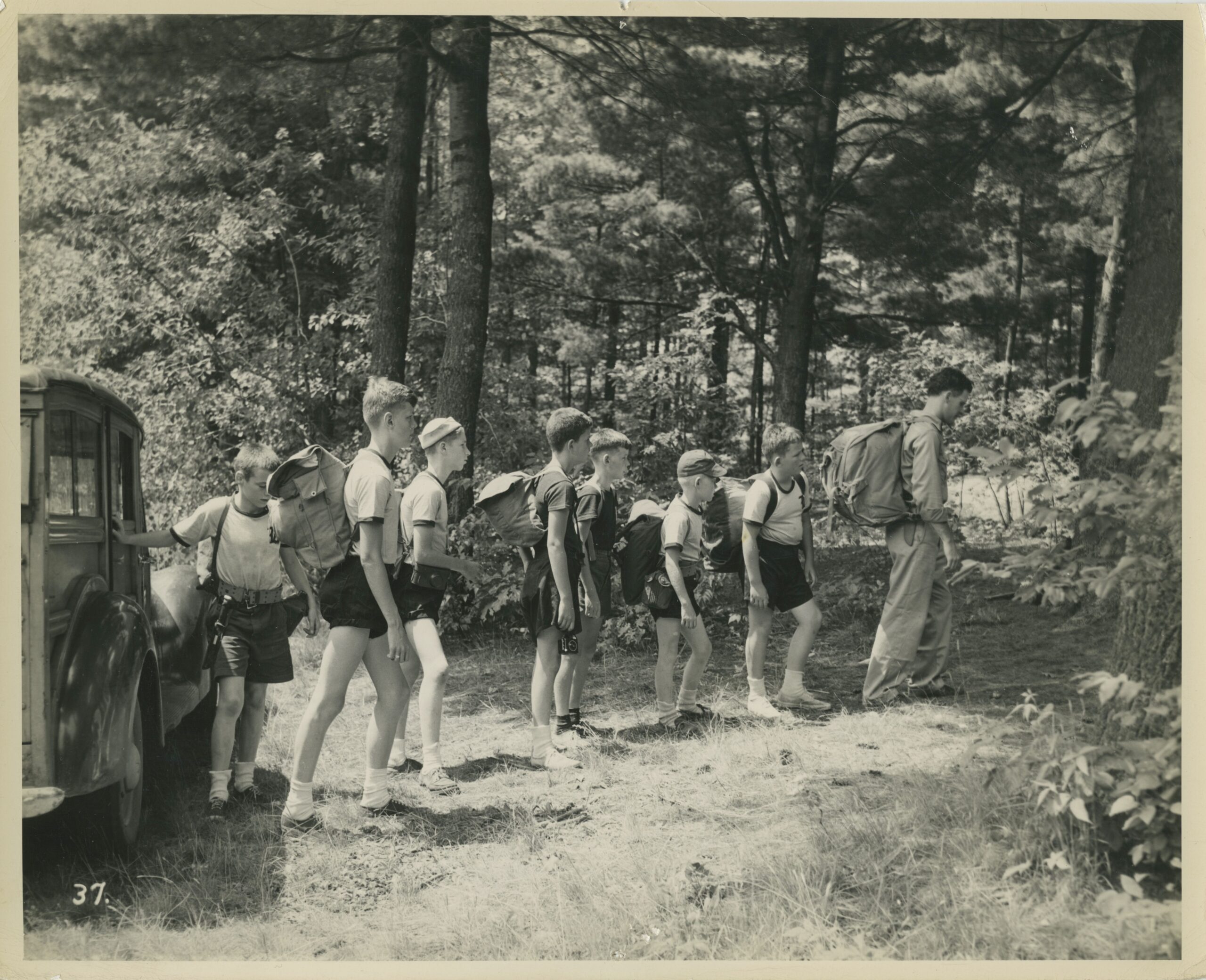
In this era, roads were primitive and travel was slow, especially in remote areas. Kabeyun relied on trains to facilitate hiking trips in the White Mountains, as Schlozman describes:
Initially, with the roads still poor and the Boston & Maine Railroad reliable, trips would begin by driving to the depot in Sanbornville, a distance of about 20 miles. A northbound train would then transport them to Fabyans at Crawford Notch. They would hike for several days before reversing the journey back to camp.
1940s
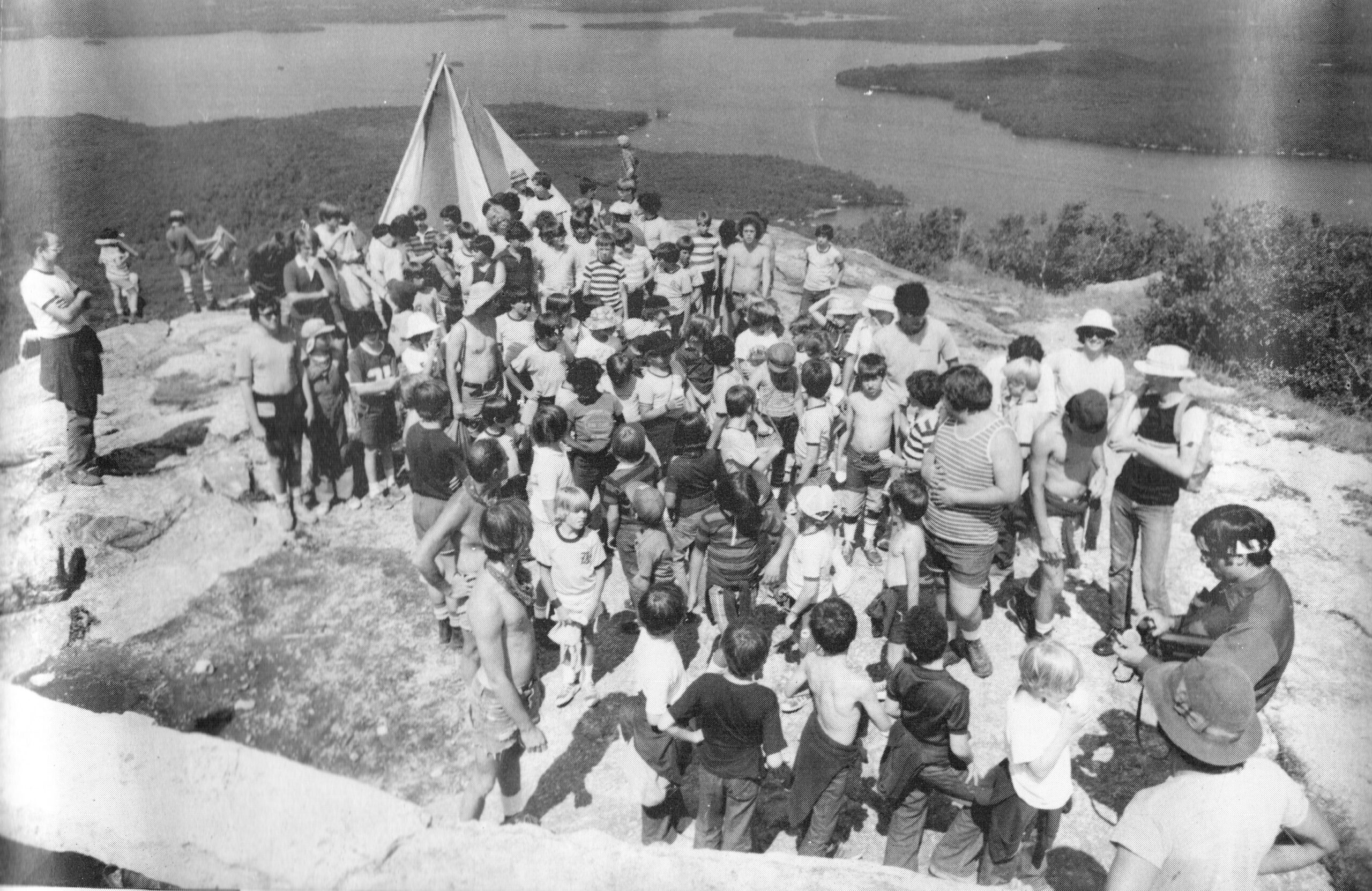
World War II brought another obstacle to travel. Gas rationing greatly limited out-of-camp trips until peace arrived mid-decade. But adventure beckoned from the Belknap Range just across Alton Bay, and everyone in camp answered the call on the Fourth of July. By the 1940s, an all-camp hike up Mt. Major had become an Independence Day tradition that endured into the next century. Jeff Kuebler, who arrived at camp in 1959, remembers the excitement of getting every camper and counselor to the trailhead.
It was an event! We used every means possible to get over to Mt. Major. We took sailboats. We took canoes. The motorboat went back and forth. We took all the cars and vans and those went back and forth, too. There was a place that let us leave our boats for the day. Then we’d walk up from the lake, across Route 11, and to the trailhead.
Hiking counselors orchestrated the outing and members of the Kabeyun Mountain Club made sure everyone was well fed and hydrated by hauling water and food, including watermelons, to the summit. After lunch and a respite on the summit, folks would head down and arrive back in camp in time for play swim, Beach Supper, and fireworks over Small Cove.
Kabeyun continued the all-camp Fourth of July hike up Mt. Major into the 2010s, when the trails and summit became too crowded for the trip to be safe and enjoyable.
1950s
The trips program flourished during the 1950s’ post-war prosperity. As roads gradually improved, more destinations came within a reasonable driving distance. To further improve campers’ access to the White Mountains, Porter purchased a piece of land in Conway, New Hampshire, in 1954. Known as “Base Camp,” it was intended as a jumping off point for multiple days of hiking. It also hosted cabin groups and nature trips, as Bill Ricker reminisces:
It was a lovely spot on the Swift River, originally outfitted with a lean-to, but sometime in the 60s, a small, enclosed cabin was built. I first used it in the late 50s, bringing the youngest boys for an overnight. They dammed up the river making a sluiceway to swim down and had a great time.
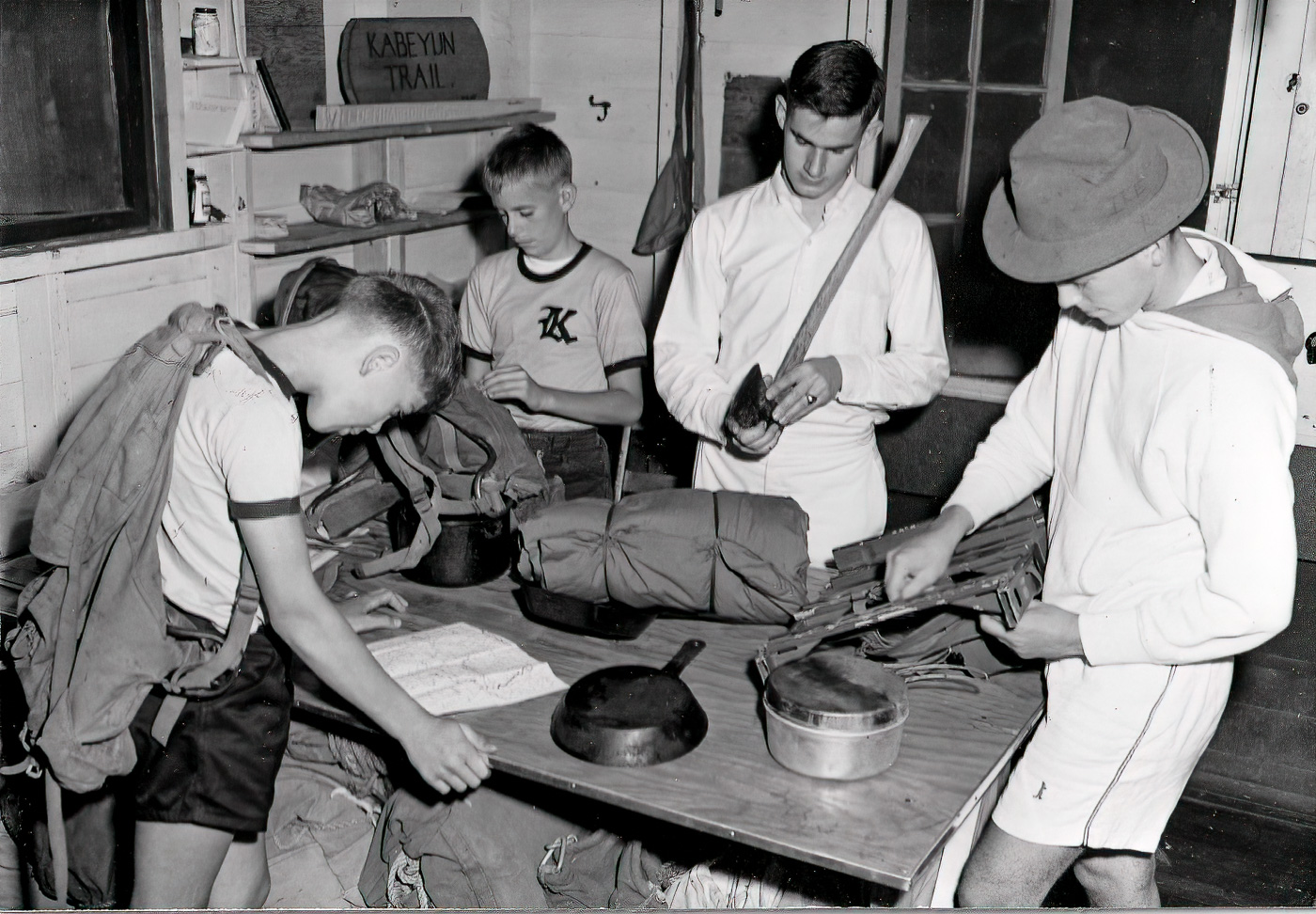
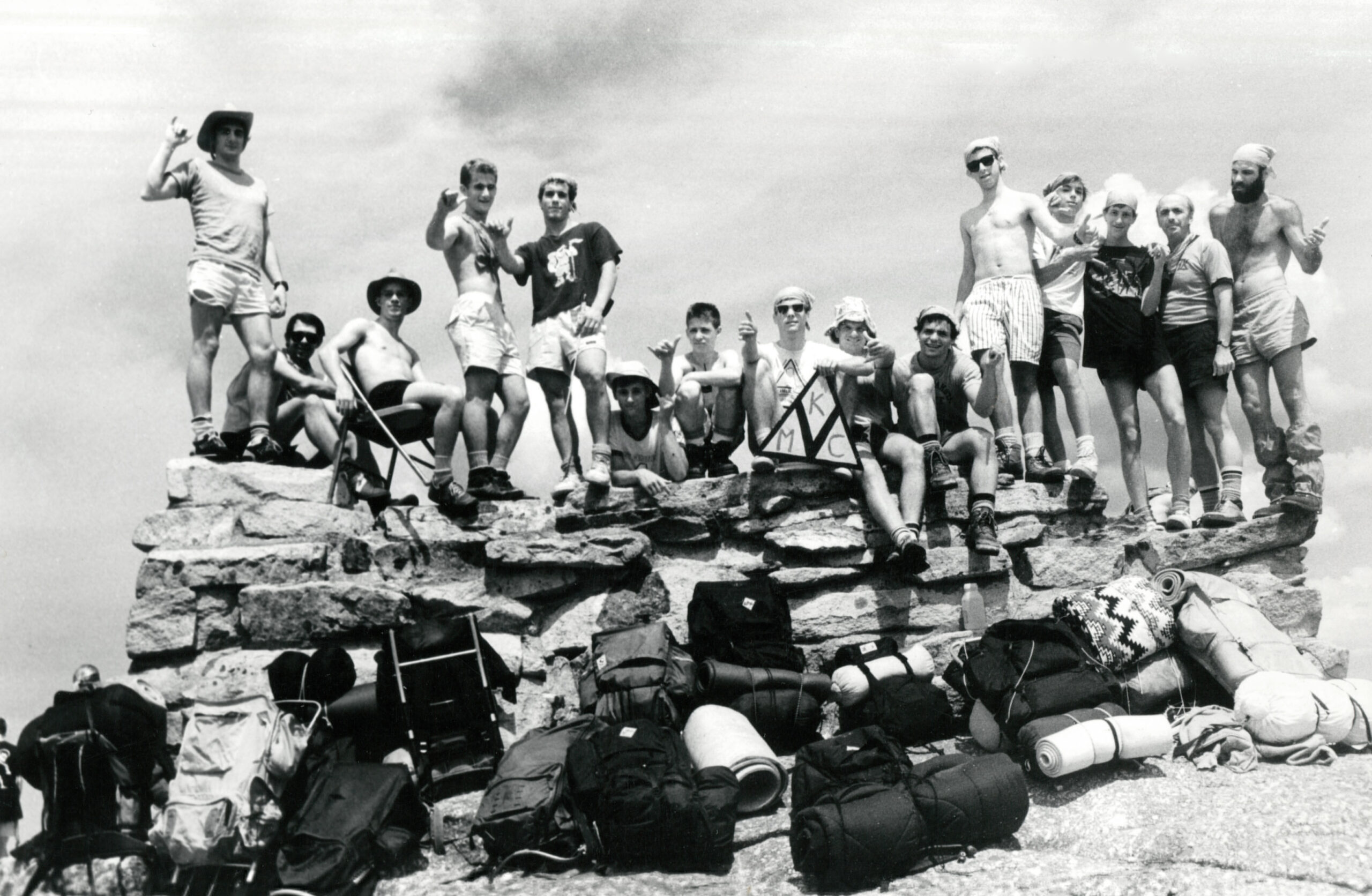
In 1953, camp built its first “trips room,” a small addition at the back of the kitchen and bakery, where counselors could store and organize equipment, maps, and more. The same year, hiking counselor Ivan Hall founded the Kabeyun Mountain Club, whose signature red bandanas endure more than 70 years later, along with the tradition of climbing Mt. Carrigain. Hall later recollected:
That peak somehow embodied the spirit of the KMC perfectly—the tough climb, the awesome panorama, and that complete isolation from other mountains and hikers that made one feel so uncannily close to Nature, as well as dependent on one’s fellow climbers.
1960s and 1970s
Throughout the 1960s and 1970s, Kabeyun continued offering canoe and hiking trips, as well as some overnight sailing trips, before development eliminated most of the camping spots on Lake Winnipesaukee. Doug Latham was among the sailing staff members who led these trips in the 1970s – usually two or three Town Class sailboats filled with campers and counselors visiting Wolfeboro, and Sandy, Cow, and Bear Islands. He recalls:
Sailing trips have always been a mixed bag in terms of wind… so we paddled those Towns many miles, but we also had some amazing sails up the Broads on heavy northwester days. It was a great sense of adventure!
For those with a big appetite for adventure, the Owls Outpost offered something special. For several years in the 1970s, Mark “Moose” Mills led a single group of campers who spent nearly all their time on hiking trips. Members of the Owls Outpost came into camp on Sunday for checkups with nurse Sue Kutenplon, and to attend Pine Point and Sunday dinner. Otherwise, they were out hiking, learning to cook at campsites, and jumping in swimming holes that Jim Kaemmerlen remembers as “crazy and dangerous.” He says:
The Owls Outpost was meant to be a more inspiring hiking program for kids who were really into hiking, who had been to camp before and realized they weren’t good at tennis and didn’t want to hang around for drama rehearsal. That was me. I was anxious to hike the 4,000 footers, to see what all those trails were like. I was an uptight, on time, regulated kid, and I needed that taste of wildness and freedom. I’m very thankful for that.
In the 1990s and beyond, Kabeyun periodically offered a similar program called Bears, in which a group of older campers spent extensive time out of camp, building their skills on backcountry adventures including hiking, paddling, and rock climbing.
1980s
The 1970s and 1980s were transformative for outdoor recreation, and industry-wide developments in equipment, materials, and professional standards shaped Kabeyun’s trips program as well. There was a dramatic shift away from gear made with down, canvas, and leather towards items made with synthetic materials. Jay Remington recalls how it played out on hiking trips:
When I was a Wolf in 1980, everyone wore wool sweaters and leather hiking boots, and our raingear was rubberized. By 1988, most of us were wearing fleece and Gore-Tex. It was a massive change – Gore-Tex, Velcro, synthetic pile, plastic in our boots, internal frame packs. This made our loads a little lighter and rain gear a little better. With Pete Flanagan and Wayne Stanton, we were pushing ourselves on longer, harder hikes, and taking a certain amount of pride in it.
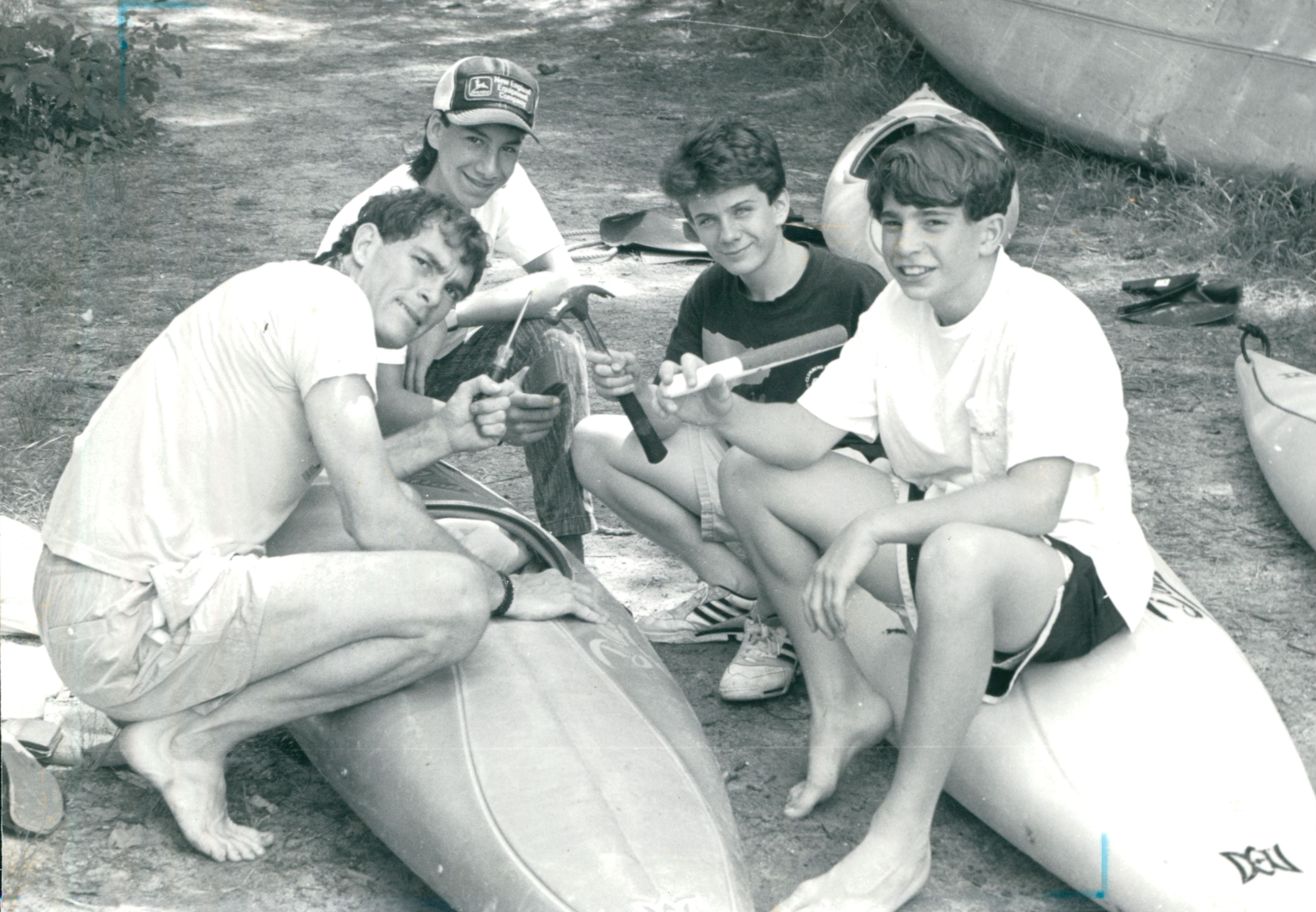
Developments in plastics also changed whitewater paddling, making rocky rivers less intimidating. Rotomolded plastic kayaks were less expensive and more durable than fiberglass or wood. When plastic kayaks first appeared in the mid-1970s, Kabeyun purchased six River Chasers. Throughout the 1980s, camp added more user-friendly kayaks, the Perception Mirages and Dancers, while shifting away from aluminum canoes, which were prone to leaking. Terry Dash, who arrived at Kabeyun in 1985, recalls gradually updating the fleet to better suit camp’s whitewater adventures:
Nick [Latham, camp’s director] let us get some Old Town canoes because they’re more durable and user-friendly. And then we got a bunch of the canoes that were smaller, the Pathfinders, because they were sized appropriately for most of our camper population. Paddle sports started to become just as popular, if not more popular than hiking, and we had trips out all the time. It would be a combination of canoe and kayaks together.
Terry’s enthusiasm and force of personality drew many campers and counselors to whitewater trips, where he emphasized developing technical skills on the river. As a Wilderness EMT in the 1980s, Terry was also at the forefront of the trend toward more specialized training and certifications for trips counselors. Pete Flanagan, who attended three NOLS courses during his Kabeyun years, inspired others to pursue training with NOLS or other wilderness programs.
Over time, Kabeyun began requiring that trips counselors complete wilderness medical training. Today, all trips counselors are certified in Wilderness First Aid and lifeguarding. Many also hold credentials as Wilderness First Responders or EMTs, or additional certifications from paddling or mountaineering organizations.
A Century of Wilderness Trips Photos
1990s
The 1990s were a dynamic time in Kabeyun’s trips program, with the birth of camp’s rock climbing program, continued enthusiasm for whitewater paddling, the advent of women as full-time trips leaders, and the construction of a new trips room.
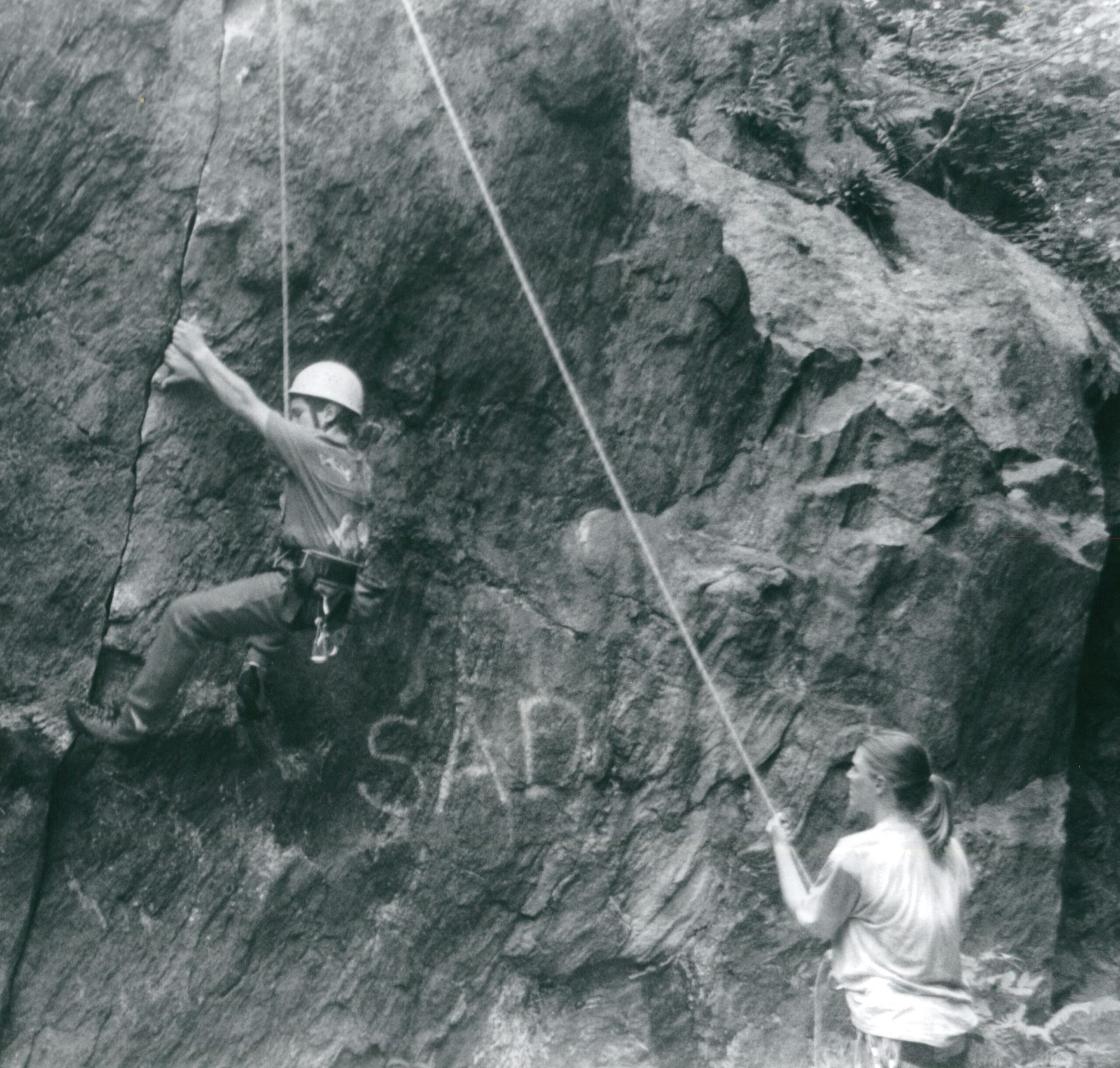
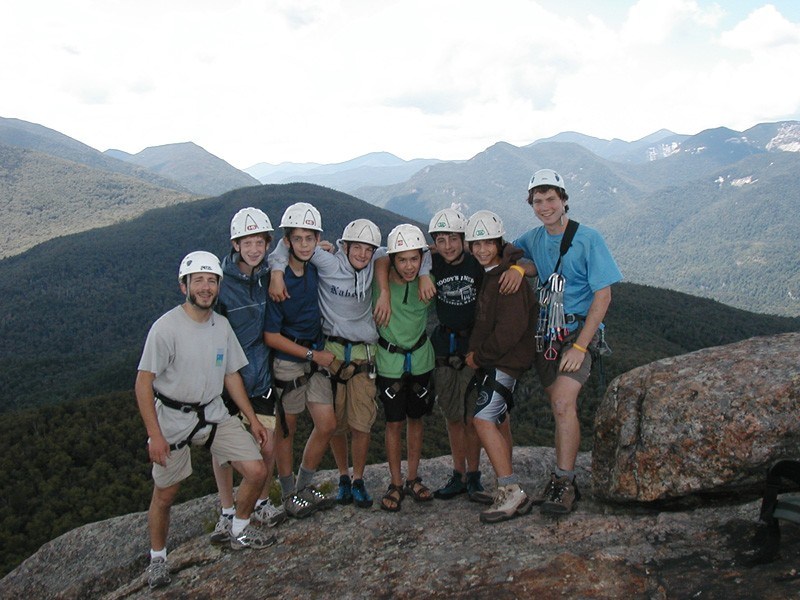
Kabeyun began offering rock climbing trips in 1990, thanks to the initiative of JT Lindholm, a counselor who had learned to climb in high school. After one summer teaching swimming, JT approached Nick Latham about starting a rock climbing program. Nick was enthusiastic, and JT began leading Kabeyun trips to Rumney and other spots. Initially, he borrowed equipment from the ropes course, which Julian Czarny had developed in the 1980s. With strong interest from campers, Kabeyun purchased more climbing gear and added a bouldering wall in 1991, where campers would get familiar with climbing knots and harnesses before heading out on trips.
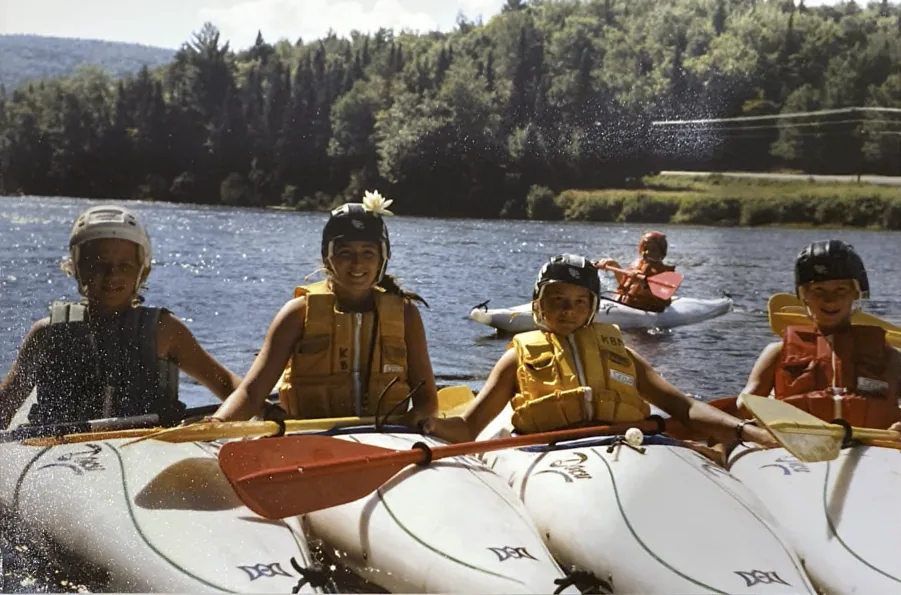
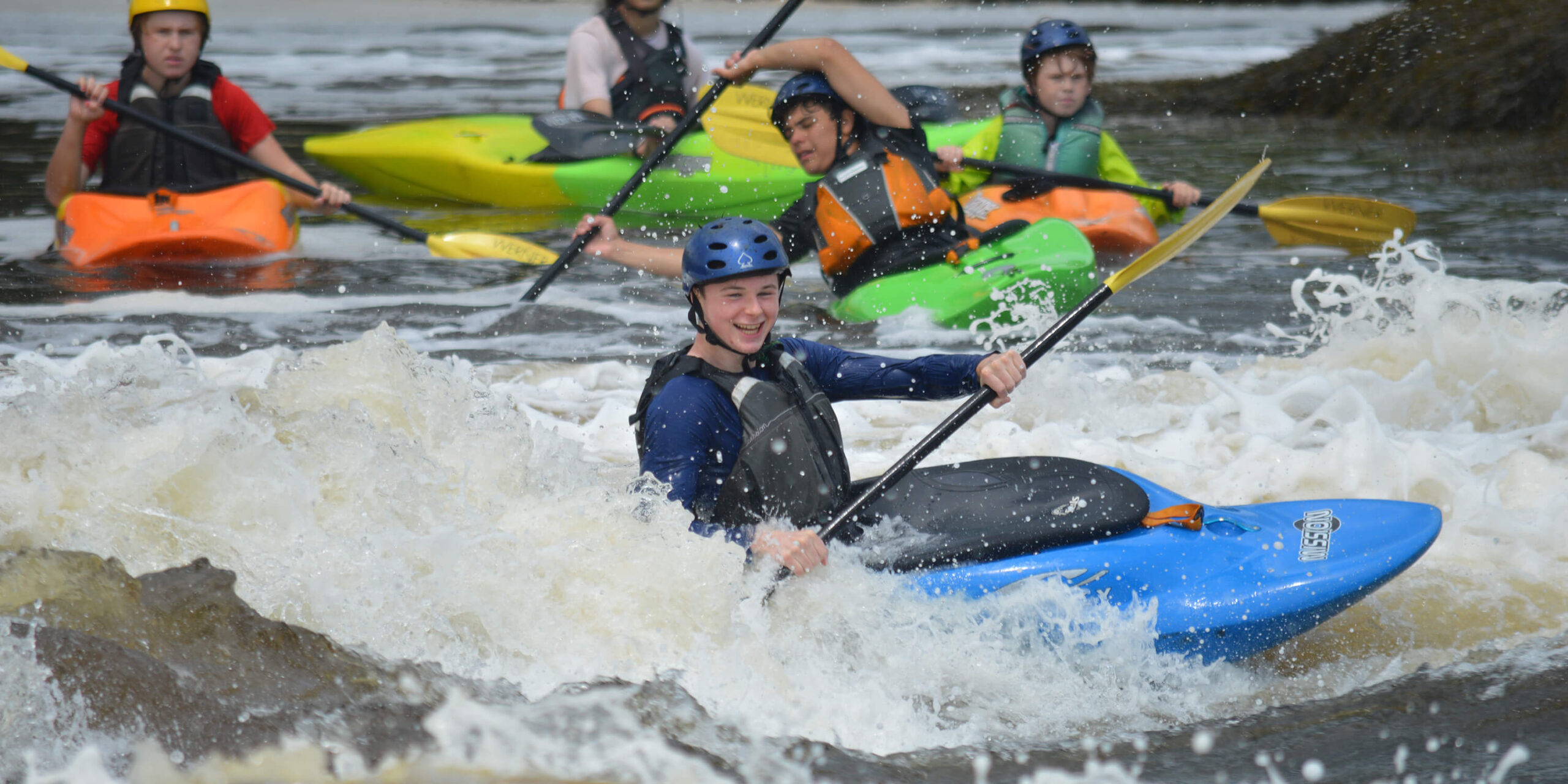
The early years of rock climbing at Kabeyun coincided with widespread enthusiasm for whitewater kayaking. Dan Levin recalls running 10 overnight trips in a single summer in the early 1990s, bringing an estimated 60 different campers to the Androscoggin River. Each kayaking trip was a chance for campers to develop both technical and leadership skills, as Carey Platto describes:
On the river, we taught the boys how to safely approach rapids. We would scout the rapids on shore, discussing and identifying our intended route and potential hazards before setting safety and running them one paddler at a time. The campers learned the importance of planning and safety as core elements of exploring new rivers by kayak.
This was also the era during which women became more fully integrated in all aspects of camp, including trips. Sue Latham, Kirsten Berggren, Elizabeth Roberts Williamson, and Jenny Sapora were among the first women to lead canoeing, kayaking, hiking, and rock climbing trips.
By the end of the decade, the trips program was testing the limits of its facilities – both the vans and the trips room. Andy von Mayrhauser recalls:
With so many more boating and climbing trips in addition to the standard hiking trips, van-sharing became a full contact sport in Sunday morning trips meetings, as we tried to balance all the trip types and experience levels. I learned how to facilitate meetings on that porch and have always felt so appreciative of the leadership experience.
In 1998, Kabeyun built a new trips room to better accommodate all the equipment and food storage required by the expanded programming. This freestanding building, funded by donors during Kabeyun’s 75th anniversary, is still used for its original purpose. Upgrades include an outdoor sink and drying racks where campers help clean kitchen items when they return from trips.
2000s
The 2000s brought a shift in mindset, an intentional effort to make sure more campers had opportunities to participate in more trips, regardless of their experience level. When Terry Dash returned as the Head of Trips in 2001, he instructed counselors to offer trips with a variety of difficulties each week, rated green (easiest), blue (moderate), and black (most difficult).
I would say, “I’m not telling you where to go. I’m just telling you we need two day trips that are green. We need one or two day trips or overnights that are blue. We can’t have four days of black hiking trips. If you’re only offering black hiking trips and taking the same kids again and again, you’re only serving a small part of the population.” That’s why we came up with the cut list in 2003 or 2004, to alleviate the problem that some kids weren’t getting out on trips.
The cut list, still in use today, is a record-keeping process to track which campers signed up for a trip but did not get to go due to space constraints. Counselors then prioritize getting those boys onto their preferred trips the following week.
This spirit of equity and access was also on the mind of Alex Arensberg when he was the head of trips in 2007 following five years as a hiking counselor. He recalls, “we worked on establishing more objective criteria for KMC and JKMC admission, in response to criticism that admission was too subjective and secretive,” a conversation that continues at camp today.
2010s
When Ken Robbins became Kabeyun’s director in 2010, he brought both an insider’s and an outsider’s perspective to the trips program. In addition to his years as a Kabeyun camper and a rock climbing counselor, Ken had led wilderness trips and teams of trips leaders for other organizations before returning as camp’s Assistant Director. He was committed to Kabeyun’s tradition of bringing boys into wild places, even when other camps were pulling back on destinations and activities they deemed “too risky.” Rather than avoiding challenge, Kabeyun chose to continually evaluate its practices and find the safest ways to bring kids into the wilderness. For example, in 2013, Kabeyun began leasing vans rather than owning them. Ken says:
Driving is statistically the most dangerous thing we do. Having new vans every year means we have the most up-to-the-minute safety features and vans that are in pristine condition every summer. We don’t have to debate when it’s the right time for camp to spend money on upgrades like lane assistant, collision avoidance, and backup cameras. As soon as a technology becomes a feature on new vans, we have it in our vans.
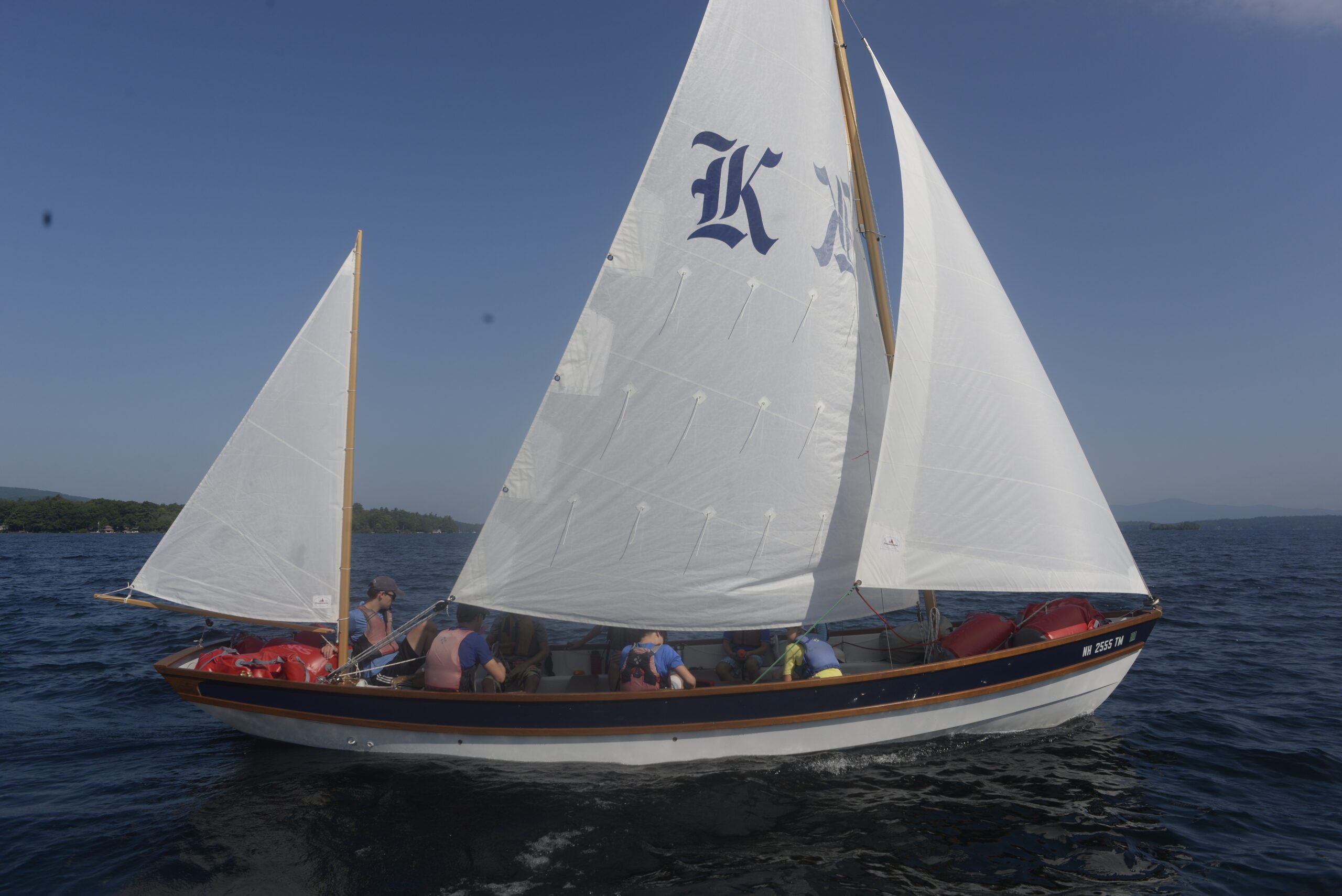
The end of the decade brought another big development. Overnight sailing trips returned, thanks to the generosity of donors who helped purchase an expedition sailboat in 2019. The 25-foot Drascombe Gig accommodates 8-12 passengers plus gear and has three rowing stations so the crew can continue moving the boat if the wind subsides. In addition to outings on the lake, sailing counselors now use the Drascombe for day and overnight trips to the Atlantic, often camping on islands in Casco Bay, Maine.
2020s
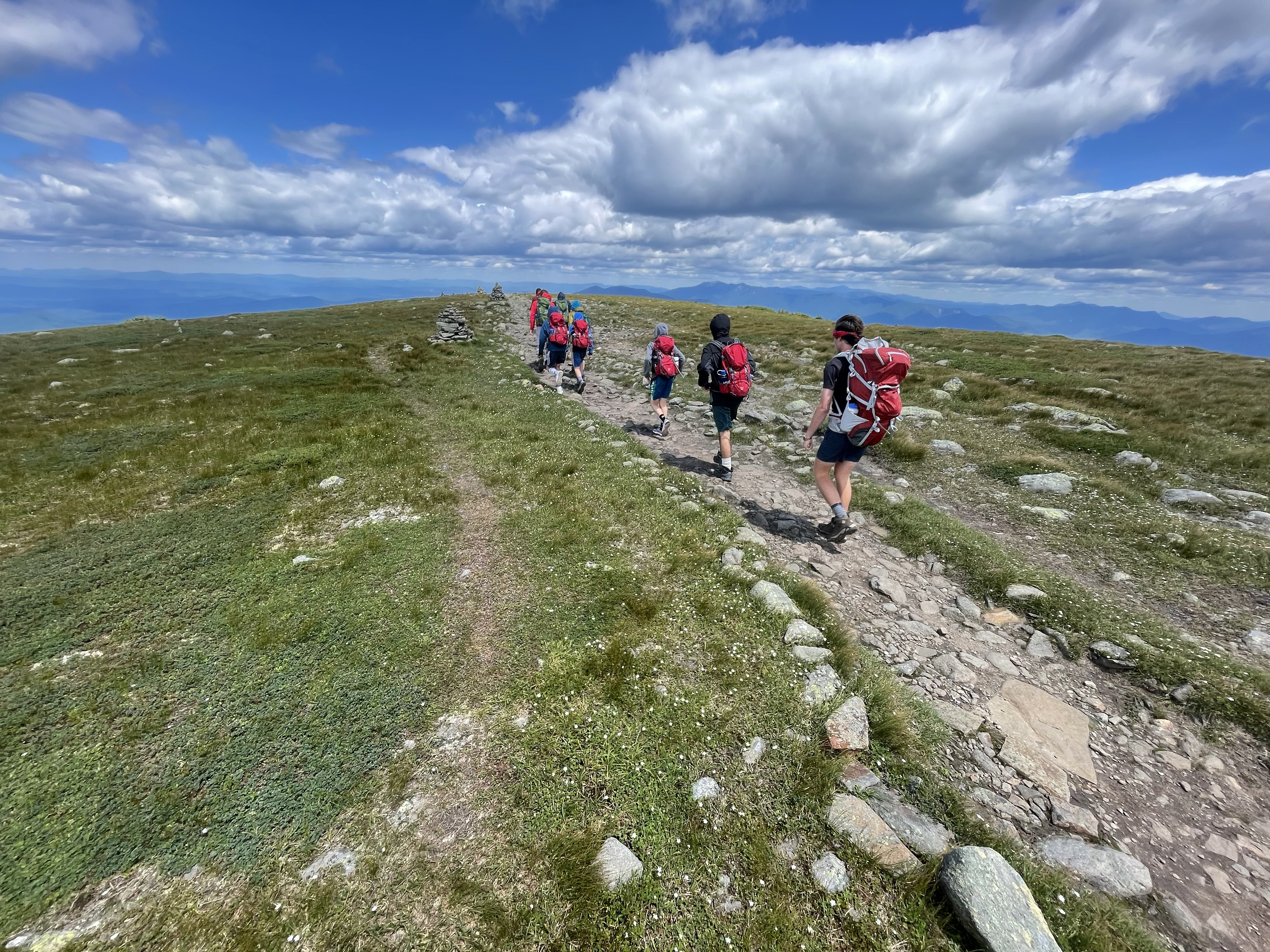
After a century of growth and refinement, Kabeyun’s trips program continues to thrive today. Sam Dyer currently leads the program with an emphasis on the risk management and planning techniques he learned and practices as a professional mountaineering guide and avalanche educator. While Sam has instituted some tangible changes, such as adding satellite communication devices and emergency shelter kits, most of his innovations are invisible to campers. He is helping trips counselors think like professional guides: recognizing the small decisions that can compound into larger problems, anticipating what could go wrong before leaving camp, and creating solid backup plans that are easy to execute in the moment. He explains:
This isn’t really a hard skill, it’s a lot of thinking and conversation ahead of time. The hiking staff talking about being above treeline in bad weather, or the paddling staff talking about the river being too high or too low. Knowing our margin for error is smaller on days when the weather isn’t great or the water’s too high, and then creating a plan that builds a wider berth around that particular thing you’re concerned about.
The goal is not to eliminate risk, but manage it wisely, and the effort appears to be paying off. Thanks to more upfront work by counselors, Sam sees fewer trips ruined by weather or injuries, allowing campers to enjoy a day developing their skills rather than reacting to preventable setbacks.
Looking ahead
There’s no doubt Kabeyun’s trips program will continue to evolve, shaped by changes in the outdoors industry, campers’ interests, and the creativity of staff members who are committed to creating memorable wilderness experiences. In the coming years, Sam would like to develop a quick debriefing process after each trip. And he and others already have more professional training planned for 2026.
Katie and Kevin Wilcox, a married pair of Kabeyun nurses who prepare medical kits for every out-of-camp trip and advise counselors on providing care in the outdoors, will attend a national conference in Wilderness Medicine in New Mexico this spring.
In June, Sam will head to the Adirondacks to become a Level 2 “Leave No Trace” instructor in a 5-day wilderness course taught by NOLS. While Kabeyun already practices LNT on all its trips, the course will reinforce ways to minimize human impact and teach LNT effectively. Sam will then train counselors to share this knowledge with campers. He says:
We’re lucky to spend a lot of time out there in the woods, mountains, lakes, and rivers, and we think of ourselves as stewards. The training will help us all be even better stewards of the White Mountains and other places where we get to play all summer.
Final thoughts
Thank you to the 26 people who contributed to this account with enthusiasm and warmth, eager to pass on their stories and answer my questions. Their participation makes clear that Kabeyun’s trips program is, at its heart, about people – people who love outdoor adventure and choose to share the wilderness with the next generation. Yes, aspects of Kabeyun’s trips program have evolved: from railcars to leased vans, canvas canoes to rotomolded kayaks, wool to fleece, and more. But the mountains, rivers, and lakes haven’t changed much in a century, nor has Kabeyun’s mission to inspire boys to discover who they are and who they want to become. In a century of innovation, the people are the throughline – generations of Kabeyun counselors who believe what a boy discovers in the wilderness is worth every bit of effort it takes to get him there.
With gratitude to: Alex Arensberg, Andy Baumel, Robyn Battaile, Kirsten Berggren, Terry Dash, Sam Dyer, Pete Flanagan, Jim Kaemmerlen, Jeff Kuebler, Doug Latham, Maria Latham, Sue Latham, Dan Levin, JT Lindholm, Carl Metzger, Carey Platto, Jay Remington, Bill Ricker, Ken Robbins, Mark Robbins, Bill Robinson, Dan Schlozman, Andy von Mayrhauser, Kevin Wilcox, Elizabeth Roberts Williamson, Jake Wolf-Sorokin, “Kabeyun: The First 100 Years,” edited by Josh Wolk, and “Kabeyun at 100: An Interpretive Essay,” by Dan Schlozman.